
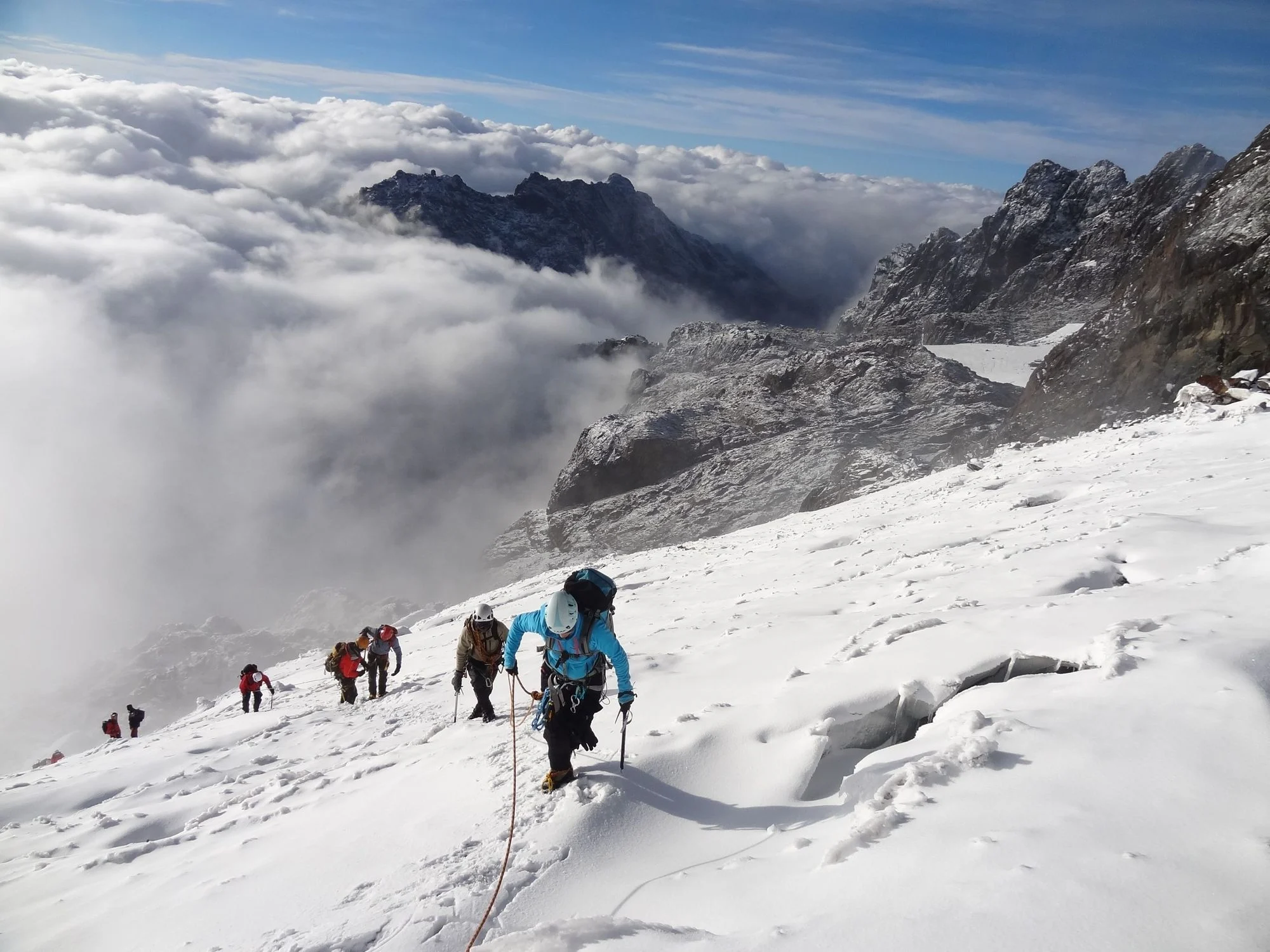
Straddling the border between Uganda and the Democratic Republic of Congo, the Rwenzori Mountains have been called the "Mountains of the Moon" since antiquity, when ancient geographers speculated they held the source of the Nile. A UNESCO World Heritage Site, the range holds Africa's third-highest peak, Margherita, and some of the continent's last equatorial glaciers.
Mountains of the Moon
Unlike the volcanic peaks of Kilimanjaro or Mount Kenya, the Rwenzoris are a block-faulted mountain range, ancient and jagged, rising to Margherita Peak at 5,109 metres. Their upper slopes hold one of the strangest landscapes on Earth — giant lobelias, groundsel forests, and Afro-alpine moorland found almost nowhere else, a legacy of the range's isolation and altitude.
What to See & Do
Multi-day treks run from a few days on the lower forest trails to a full 7-9 day expedition to Margherita Peak, passing through five distinct vegetation zones as you climb. Even shorter day hikes into the foothills reward visitors with dramatic waterfalls, rare bird species, and views across the Albertine Rift. The Bakonzo communities on the mountain's lower slopes offer cultural encounters and trained local guides for every route.
Best Time to Visit
The driest and most reliable trekking windows are December-February and June-August, when trails are less muddy and visibility on the higher ridges is best. Rain gear is essential year-round given the range's notoriously wet upper zones.
Getting There
Trailheads are accessed from Kasese or Fort Portal, both roughly 6-7 hours from Kampala by road, or a short flight to Kasese airstrip. Treks should be booked in advance through a licensed operator, given permit and porter arrangements.
Back to All Destinations