Bunyoro-Tooro Junction
Crafting Memories Across Africa

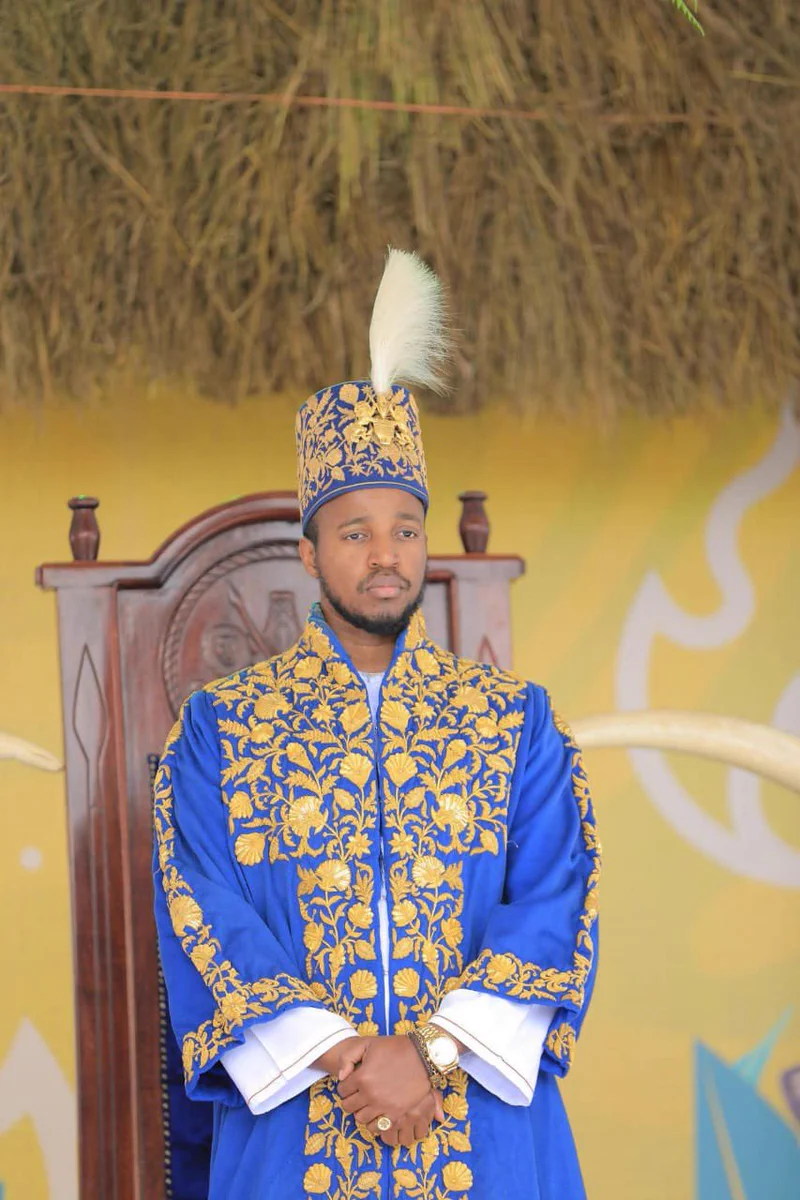
There are people who are born into greatness so early that the world forgets to ask if they wanted it. King Oyo Nyimba Kabamba Iguru Rukidi IV was one of those people. He did not choose the throne of Tooro. He was three years old when the crown found him, too small to understand what it meant to be Omukama, too young to know that the world would watch him grow the way a nation watches its own reflection in still water.
And watch, we did. We watched a boy become a symbol before he became a man. We watched him carry the weight of an ancestral kingdom on shoulders that had not yet finished growing, and somehow, he wore it with a grace that felt almost unfair to expect from someone so young. He was the world's youngest reigning monarch, yes, that is the line that made the headlines, the fact that traveled beyond our borders and into record books. But those of us who watched him longer than the headlines allowed knew there was more to him than the record. There was a quiet dignity. There was a boy who studied abroad and still came home. There was a king who understood, somehow instinctively, that a crown is not a possession but a responsibility passed through you, not to you.
He has died young, far too young, and there is a particular kind of grief that comes with losing someone who was still becoming. We will never see the fullness of what his reign might have grown into. We will never know all the ways he might have shaped Tooro in the decades that were owed to him. That is its own private ache, the grief of unfinished things, of a story cut off mid sentence.
But grief, if we let it, can also be a kind of instruction. It can teach us what to hold onto.
King Oyo's life was, in its own way, a love letter to Tooro. To its hills and its history, to the Rwenzori mountains standing guard over the kingdom like old and patient relatives, to the palaces and the rituals and the stories passed from elder to child around fires that have never really gone out. He carried Tooro's name into rooms it had never entered before. He made the world curious about a kingdom many had never heard of, and in doing so, he opened a door.
It falls to us now to walk through that door and keep it open.
I want to promise something, not to him, because he cannot hear promises anymore, but to Tooro itself, to the land and the people who gave him his crown and his purpose. I promise to keep the flame burning. Not as metaphor alone, but as practice. To speak of Tooro's tourism sites the way one speaks of family, with pride and with detail, so that visitors do not simply pass through but arrive curious and leave in love. To tell the stories of the Amabere ga Nyinamwiru caves and the crater lakes and the palace grounds not as tourist attractions but as living memory, as proof that a kingdom this old still has a heartbeat. To teach the young ones, the way King Oyo himself once had to be taught, that heritage is not a museum piece. It is inheritance. It is duty. It is love, dressed in the clothing of history.
A king has died. But a kingdom does not die with its king. It survives in what we choose to remember, what we choose to protect, and what we choose to pass on with our own two hands.
Rest now, Omukama. We will keep the fire.